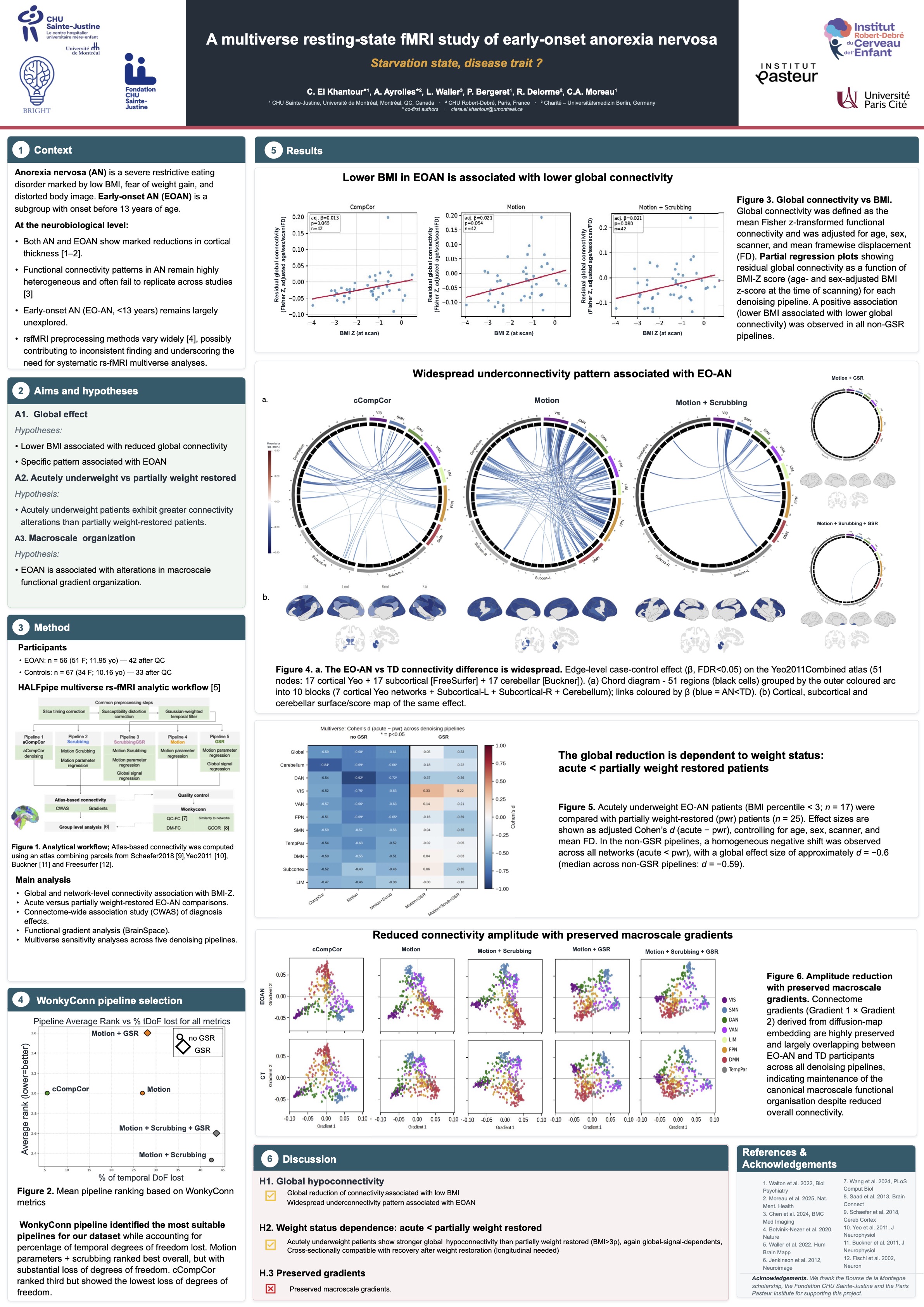
Brain Trajectories and Prognosis in Anorexia Nervosa#
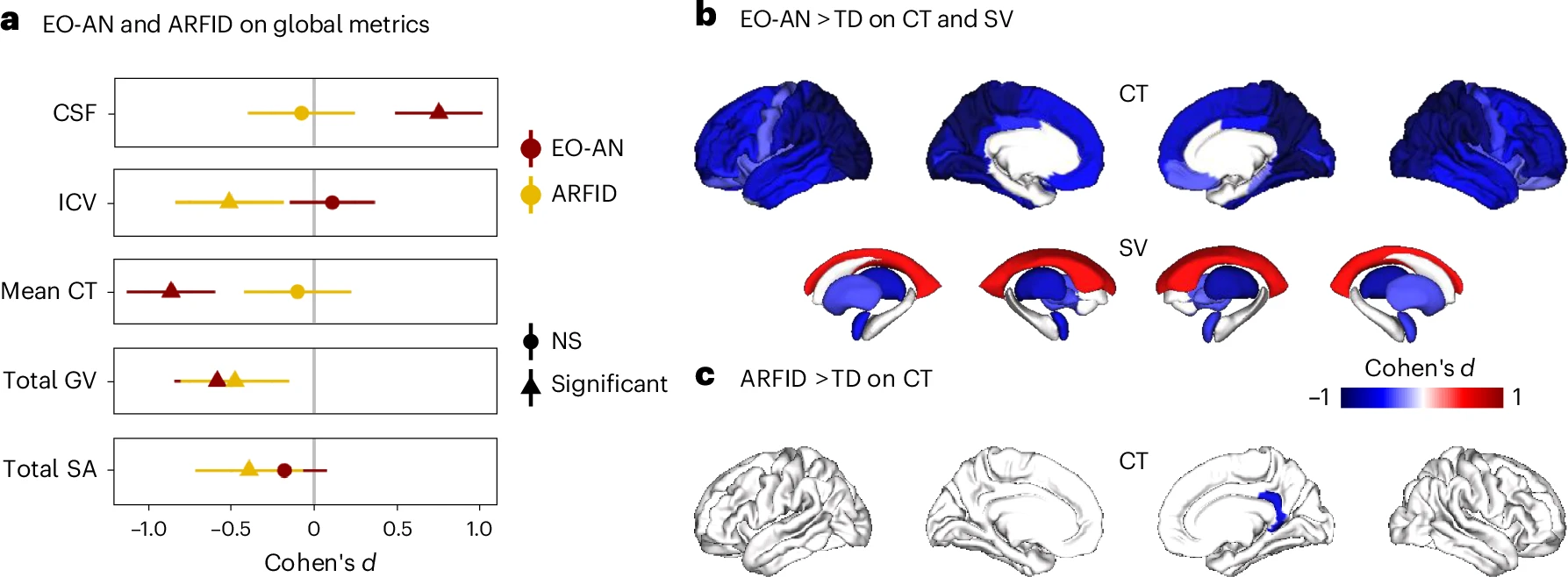
Source: Moreau et al., 2025. Nature Mental Health. https://doi.org/10.1038/s44220-025-00447-x
Anorexia nervosa is associated with one of the highest mortality rates among all psychiatric illnesses. This elevated risk stems from a combination of medical complications due to prolonged malnutrition and suicide, with mortality increasing by approximately 5% for each decade of illness. Typically emerging during adolescence, anorexia is characterized by severe and persistent dietary restriction, low body weight, and distorted body image. Relapse is common after weight restoration, with only ~60% of patients achieving sustained remission. Despite the severity of this condition, the neurobiological mechanisms underlying relapse and treatment response remain poorly understood.
To address this gap, we are conducting a longitudinal study at CHU Sainte-Justine, following a cohort of patients aged 8 to 16 years at various stages of clinical care and post-hospitalization. At each time point, we collect multimodal brain imaging, along with clinical and cognitive assessments.
Our goal is to develop predictive tools for relapse risk by examining brain recovery status after weight restoration, combined with clinical markers. Identifying early indicators of relapse could enable more personalized interventions and help prevent the transition to chronic illness. This project is part of a larger international effort that our lab co-leads through the ENIGMA Eating Disorders Working Group, which brings together over 20 research sites worldwide. Beyond its clinical implications, this study provides a unique opportunity to investigate brain plasticity and adaptation mechanisms in the context of prolonged malnutrition.
We are currently recruiting participants for this study. For more information see our recruitment page
Content related#
Poster - OHBM2026#